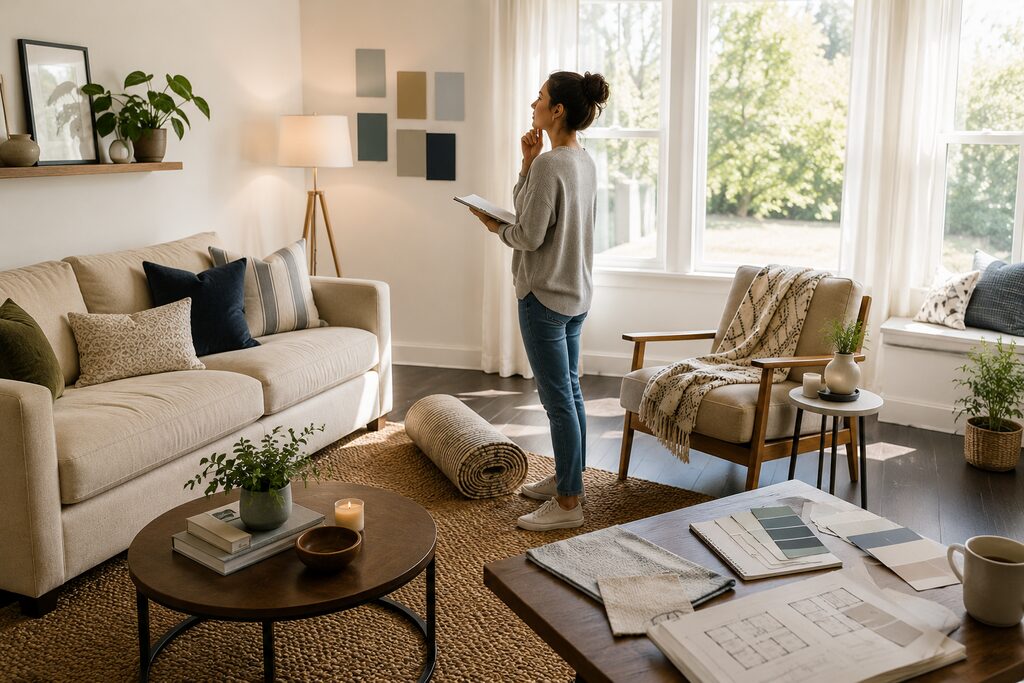
Many homeowners search for room makeover ideas when one room starts to feel tired, crowded, or unfinished. The first thought often goes straight to renovation: new floors, custom storage, or a contractor-led project. But in many homes, the problem is smaller than it first appears.
A room may feel off because furniture blocks movement, daylight cannot reach the right corners, or the wall color makes the floor, sofa, or curtains look dull. Before making a big purchase, ask one simple question: What is actually causing the problem? That is the starting point for learning how to redesign a room without wasting money.
Room Makeover Ideas: Start With What You Already Have
The best room makeover ideas usually begin with what is already in the space. Before buying anything new, remove items that no longer have a clear purpose. Over time, extra furniture, decor, papers, and unused objects can turn into visual noise, making the room feel smaller, darker, or less calm.
Once there is less in the room, the real issue becomes easier to see. A living room that felt cramped may simply have too many side pieces. A bedroom that felt dark may have heavy curtains or furniture blocking natural light.
Start by walking through the room as you normally use it. Notice where you have to step around chairs, cross through the middle of a seating area, or squeeze between furniture. These small points of friction often show where the layout is working against the room.
In a living room, the sofa and chairs should make conversation easy. In a bedroom, the bed should feel balanced in the space, not pushed into the only empty corner. Good layout starts with movement, comfort, and how the room is used every day.
Next, study the light. Daylight should enter the room with as little obstruction as possible. Move tall furniture away from windows, pull heavy pieces out of dark corners, and place seating where the room gets the best natural light during the hours it is used most.
Some of the most effective room makeover ideas start with rearranging, not buying. A room usually feels larger, brighter, and more useful when the furniture supports daily life instead of blocking it.
See the New Layout Before Committing to It
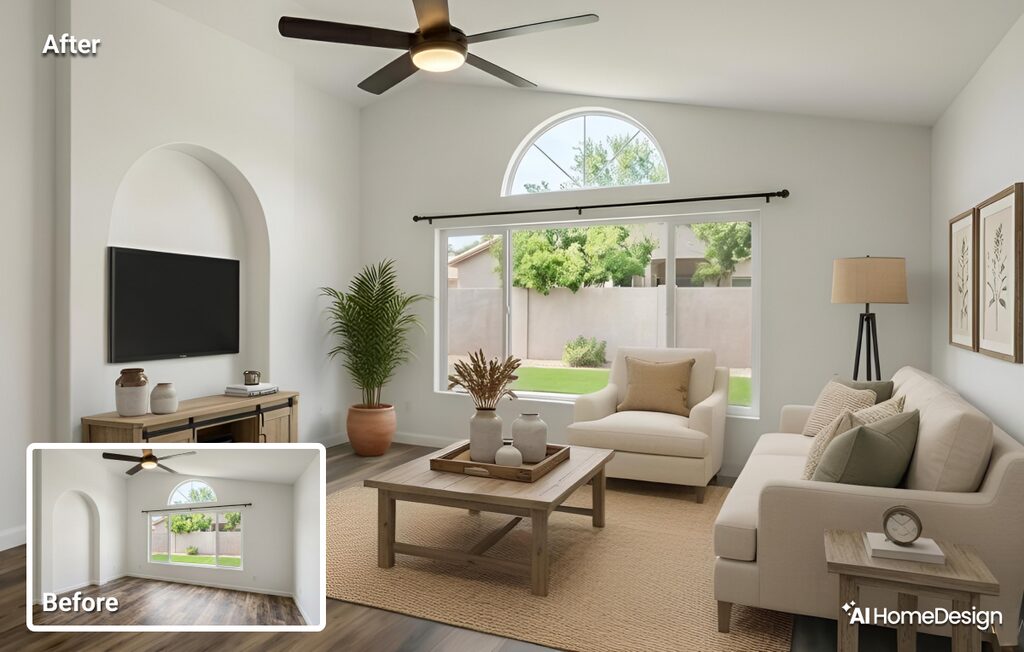
Many people looking for ways to redesign a room want one thing before they spend money: a clearer picture of how the change will actually look in their own space.
Before ordering a sofa, rug, or paint color, homeowners can use a virtual staging ai tool to preview ideas in the room itself instead of relying on a showroom image or guesswork.
Every room has its own light, angles, ceiling height, flooring, and existing furniture. A preview helps test ideas against those real conditions before any money is spent. It gives homeowners the chance to try a lighter wall color, move the bed to another wall, compare rug sizes, or explore a different furniture style.
The goal is not perfection. It is simply to measure twice and buy once.
Pick the Paint Color Before Shopping for Furniture
Wall color shapes the mood of a room, so it should be considered before adding more furniture. Many homeowners do the reverse. They buy a sofa, cabinet, or bed frame, then try to find a paint color that makes everything work. That can create limits too early.
Paint covers a large part of the room, so it changes how every other item looks. It affects the floor, curtains, artwork, and furniture. A warmer wall color, for example, can make an older sofa feel more intentional. A cooler color may make certain wood tones, fabrics, or finishes feel out of place.
The best choice does not need to be bold. Many rooms benefit from warm white, soft green, muted beige, or another calm color that works with the pieces already in the space. Room transformation ideas usually work better when the wall color supports the room as a background, instead of competing with everything in it.
Finish With Lighting and Textiles
Lighting, rugs, curtains, cushions, throws, and small decor should come after the main decisions are clear. These pieces can change the mood of a room quickly, but they work best when they support the layout, wall color, and furniture direction.
Start with lighting. One ceiling fixture often leaves a room feeling flat. A floor lamp near a reading chair, a table lamp beside a sofa, or softer bulbs in a harsh corner can add depth. Better light also helps paint, furniture, and fabrics look their best.
Then move to textiles. A rug can connect furniture pieces. Curtains soften hard walls, while cushions and throws add color without making the room feel busy. These updates cost far less than construction, but they can make the room feel finished.
When a Room Actually Needs Renovation
Some rooms need more than redesign. Structural damage, water issues, broken flooring, mold, and plumbing problems all call for professional help.
Most ordinary room problems, however, do not fall into that category. A cramped living room, dull bedroom, or unfinished dining area may only need a clearer layout, improved lighting, a better color direction, and more thoughtful purchases. This is the practical side of learning how to redesign a room: knowing the difference between a construction problem and a design problem.
That distinction protects the budget. It also keeps a fixable room issue from turning into a much larger project. The best room transformation ideas begin with knowing what needs repair and what simply needs a stronger design plan.
Final Thoughts
The best room makeover ideas usually follow a clear order: assess the room, remove what no longer helps, rearrange the layout, preview the plan, choose a paint direction, then finish with lighting and textiles.
Homeowners who shop first often spend more and fix mistakes later. Those who plan first are more likely to avoid unnecessary purchases and create a cleaner, more comfortable result.
The lesson is simple: start with what is already there, test the idea before spending, and leave the finishing touches for the end. That sequence turns ordinary room makeover ideas into a room that feels calmer, brighter, and more useful.
About Author