A deck can look perfectly fine in a photo. Real life tells the rest of the story. The furniture fits. The patio looks organized. The garden view helps. But if someone steps onto the stairs, grabs the railing, and feels it move, the deck stops feeling relaxing.
That is why basic deck safety tips should come before color, furniture, or railing design. A deck should feel connected to the house, not like a platform people use cautiously because something about its security feels off.
Start With a Simple Visual Inspection Checklist for Deck Safety
Before the upgrade list grows, inspect the deck carefully and pay attention to the deck’s condition as a whole. Walk across it slowly and feel for bounce. Look for boards that lift, dip, crack, or feel soft underfoot, especially near the floor areas people use most. Check for water stains, loose fasteners, rotted wood, insect infestation, and moisture that seems trapped in corners or under furniture.
A simple visual inspection should usually cover:
- boards that feel soft, spongy, cracked, or uneven;
- fasteners that are loose, rusted, missing, or pulling out;
- water stains around corners, stairs, posts, and furniture;
- signs of insects, rot, or moisture trapped close to the surface;
- areas where leaves, shade, or poor drainage keep the deck damp.
If the underside is accessible, check that too. Look at the deck joists, support posts, flashing, the ledger board, and other key components near the house. Loose lag screws, moisture damage, wood rot, and weak framing are not style problems. They are signs that the structure may need attention before necessary repairs become larger.
Regular maintenance helps catch this early. Inspect your deck annually at the start of spring, before small deck safety problems become easier to ignore. Damp climates can push wood to expand, crack, and rot when excess moisture sits too long, so drainage and cleaning matter if homeowners want to prevent water damage. Clean your deck annually to prevent mold growth, especially under trees where debris collects. Trim trees to reduce shade and help deck surfaces stay dry.
Outdoor Stair Railing Code Requirements Start With Solid Stair Railings
A loose outdoor stair railing changes how people use the deck. They slow down. They grab it carefully. They notice the movement. A small shift may not look dramatic, but stairs need confidence. A railing that moves does not give much of it.
Stair railings should feel solid, be well fastened, and sit comfortably in the hand. Deck railings are commonly expected to be at least 36 inches high, while balusters should have no more than 4 inches of space between them for safety. Before replacing major parts or planning repairs, homeowners should check local requirements and local code requirements.
A quick railing check should usually include:
- posts that do not shift when pressure is applied;
- a handrail that feels comfortable and secure;
- balusters with safe spacing;
- fasteners that are not rusted, loose, or pulling out;
- lower rails and stair connections that are not soft, cracked, or water-damaged.
Good railing design still matters. Wood can feel warm and familiar. Painted metal can make front steps look cleaner. Wrought iron suits a classic porch. Glass railings keep the view open. Cable railing offers a modern railing style without blocking the outdoor living space.
Still, style is the second step. A custom railing needs strong posts, a secure bottom rail, reliable screws, and proper installation before it can stay in good condition. Front porch railings should be checked too, especially in areas where rain hits the same joints and fasteners again and again.
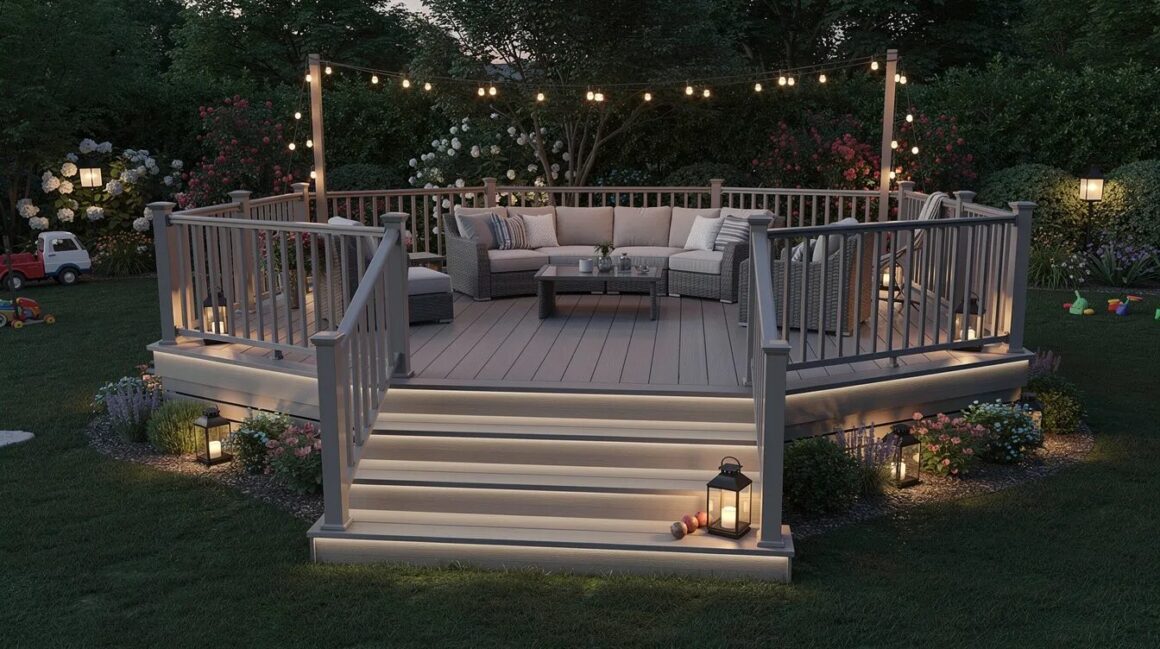
Make Deck Stairs and Front Steps Work Like Part of the Room
A deck should not feel randomly attached to siding. It should work like another room, just outdoors.
Think about movement. If the grill blocks the door, people will hate using it. If the table sits too far from the kitchen, outdoor dinners become annoying. If the seating faces a blank fence instead of the yard, the space feels less inviting.
That is where custom deck planning for everyday outdoor living matters. The goal is not to impress people from a distance. It is to create an outdoor space that works up close, with family dinners, wet shoes, pets, guests, quiet coffee, and the normal habits of outdoor living.
A cover, better lighting, built-in seating, or a cleaner route from the indoor room to the patio can help more than a dramatic feature. The best ideas often make the space easier, not louder. They make the deck easier to use.
Composite Decking, Deck Railing, and Maintenance Still Matter
Composite decking can make deck care less demanding, but it still depends on how the boards are installed and whether the framing is in good shape. Wood has natural character, no question. The tradeoff is maintenance: sealing, cleaning, moisture control, and refinishing every few years. In wet climates, high-quality water-based stains or sealants are often used to help the boards hold up.
If treated wood is pressure-washed, keep it gentle. Use the lowest PSI that gets the surface clean. Too much pressure can damage the board face and leave the wood more vulnerable. Where heavy shade keeps boards damp, tree trimming can make a real difference. So can keeping leaves, dirt, and debris off the surface. Waterproof sealants can help reduce water damage when they are used at the right intervals.
Professional inspections matter because some deck problems stay hidden. Regular checks are a good habit, but every few years, the deck may need more than a quick DIY look. A deeper inspection can spot moisture damage, weak connections, and structural integrity problems before they become larger issues.
Final Thoughts: Keep Deck Safety in Top Shape Before Style
A deck becomes part of the home when it feels safe, comfortable, and usable. The railing can look great. The furniture can be clean. The patio layout can be beautiful. But if the stairs are weak, fasteners are loose, or rot is spreading, the design is not doing its most important work.
For a complicated site, slope, drainage problem, or larger replacement, working with a Seattle area deck company with design-build experience can help connect the design with the structure underneath.
Good deck planning starts with safety. After that, the style choices are much easier to enjoy.
About Author