Fence repair rarely starts with a dramatic failure. Usually, it is something annoying. A dragging gate. A post leaning after heavy rain. A board that keeps popping loose, even though you swear it was fixed last summer. At first, it looks like a quick job: screws, a patch, maybe fresh paint on the panel. Sometimes that solves it. Sometimes it just covers the problem for a while, especially when the damage is isolated and not tied to weak posts, constant moisture, or frequent repairs in the same spot.
The difficult part is knowing what you are actually looking at. In wet climates, a fence can look acceptable from the sidewalk and still be breaking down at ground level. That is why appearance is only part of the decision. Posts, drainage, material, and the spread of the damage matter more.
Best Fence for Wet Climates: Start Near the Soil After Heavy Rain
The first place to check is not the top rail. It is the base of the post. That is where many fences fail. Wood sits near wet soil, absorbs moisture, then slowly softens. Add constant exposure, high humidity, freezing winters, and rainy climates, and the problem moves faster than homeowners expect. These weather conditions can weaken structural integrity at ground level before the rest of the fence looks unsafe.
A traditional wood fence can still be repaired if the issue is small. One broken board? Fine. One loose hinge? Probably manageable. One post with a drainage problem? Maybe. Many wooden fences still have years left if the fence continues to stand straight and the damage has not spread into the rails or posts.
But several leaning posts, rotted wood in different areas, or rails pulling away from the line usually point to something bigger. At that point, it helps to bring in a fence contractor who can tell repair from replacement before paying for another temporary fix.
Vinyl Fence, Cedar Fence, and Other Wet Weather Options
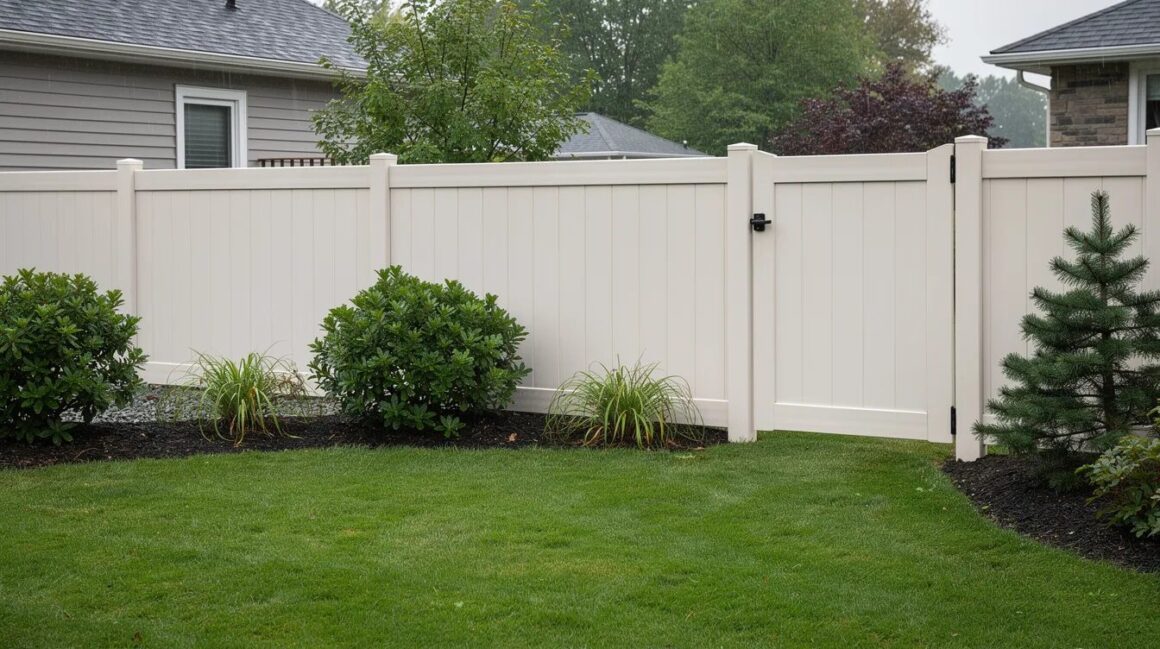
Vinyl fencing is a smart option where rain is common because, unlike wood, water does not soak into it. That means it does not need the same regular staining schedule a traditional wood fence uses to prevent rot. Upkeep is usually straightforward, and occasional cleaning with mild soap and water can handle most dirt, pollen, storm residue, and yard debris. For homeowners comparing vinyl options with other materials, this can make vinyl a long lasting alternative with minimal effort.
Cedar fencing has more natural beauty. It adds warmth and texture, and cedar’s natural oils help the wood resist rot and pests. But cedar needs steady care, especially in wet climates. A water repellent stain can help protect the surface from moisture and UV rays, and sealing every one to two years is often necessary if the fence is going to last. Put it off, and moisture damage or insect damage becomes harder to control.
For wet areas, the main difference between common fence types usually comes down to upkeep:
- Vinyl fencing works well when low maintenance matters more than a natural wood look.
- Cedar fencing brings warmth and texture, but it needs regular care to stay protected.
- Composite fencing can be a compelling alternative when durability and moisture resistance are priorities.
- Aluminum fences fit humid climates because they do not rust.
- Steel fencing can perform well, but only with the right coating, finish, and hardware.
- Chain link fencing is more practical than decorative, though galvanized chain link still makes sense for pets, security, and long fence runs.
Composite fencing can be a compelling alternative for homeowners who want a durable fence without constant maintenance. Many composite materials include recycled plastics and are specifically designed to resist rot and moisture absorption. Aluminum fences are also a good match for humid climates because they will not rust. Steel fencing can perform well too, but only with the right finish and hardware. Compared with traditional fencing in wood-heavy designs, these fence types can reduce moisture-related upkeep when installed correctly.
Chain link fencing is built more for function than style, but it still belongs among practical fencing options for wet areas. Galvanized chain link stands up to rain better than untreated metal and works well for pets, security, long fence runs, and open sightlines. Still, it needs attention sometimes. An occasional wash, plus checks for rust, loose fasteners, and bent posts, keeps it in better condition.
Low-Maintenance Fence Options Are Not Maintenance-Free
A low-maintenance fence sounds great. A maintenance-free fence sounds even better. The catch is that no fence gets to ignore weather forever, even when it belongs to the most practical low-maintenance fence options.
The easiest way to think about maintenance is simple: every material has a weak point.
- Vinyl fencing keeps upkeep simple, but it still needs regular maintenance now and then.
- Cedar fencing can last for decades if it is properly maintained, but it can become high maintenance when moisture control is ignored.
- Composite fencing reduces the workload and offers minimal upkeep, yet correct fence installation still matters.
- Any fence material can fail early if water sits around the posts, hardware corrodes, or soil traps moisture at the base.
Bad drainage can shorten the life of even good fence materials. That is why concrete footings should slope away from each post instead of letting water pool around the base. These details are easy to overlook, but they often decide whether a new fence lasts or starts leaning early.
Initial Cost vs Long Term Cost: Where Fence Installation Adds Long Term Value
The initial cost of repair is usually lower. That is why it is tempting. But the long-term cost changes when the same section keeps failing. Wood fencing often wins on upfront cost and may look affordable per linear foot. In a wet area, though, it can become much more work than expected. Vinyl or composite fencing may have a higher initial cost at installation, with vinyl especially offering better long-term value when it avoids repeated repairs. The right fence is not just about price. It is about the yard, the budget, and how much maintenance you are willing to keep up with.
When Replacement Makes More Sense
Replacement starts to make sense when the fence is failing as a system. Multiple posts are leaning. The gate will not stay square. Panels no longer line up. There are insect infestations, repeated moisture damage, or visible rot across more than one section.
That is when repair stops being a smart investment. You are not just buying a beautiful fence. You are paying for better drainage, the right material, stronger installation, and residential fencing services that address the real source of the problem. In wet areas, long-lasting performance often depends on solving the cause of the failure, not only replacing the most visible damaged part.
Final Thoughts
Small damage does not always call for a full replacement. If the fence is still strong, repair may be enough. But when the structure keeps sending the same warning signs, replacement is usually the more practical choice. A long-lasting fence is not just the cheapest repair today. It is the long-lasting solution that stays straight, handles rain, and keeps working without constant attention later.
About Author