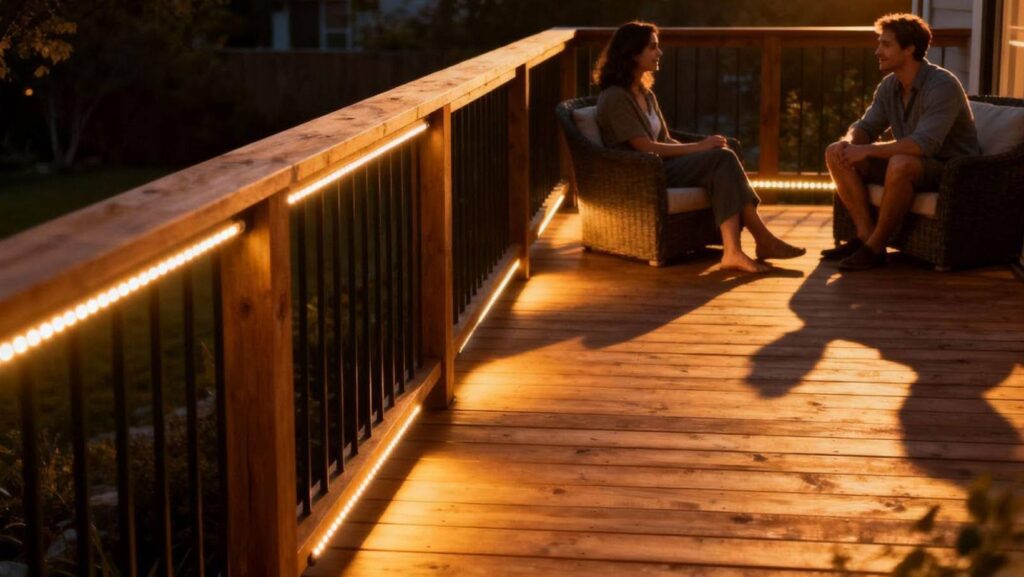
Here’s the thing about decks. They’re great during the day, but once the sun sets, they turn into this dark, unused space in your yard. That’s where lighting comes in. Not those harsh floodlights that make your backyard look like a parking lot, but actual designed lighting.
Under-rail and in-deck systems are changing how people use their outdoor spaces. You get safety, style, and, honestly, it makes your home worth more. Win-win-win.
Under-Rail Lighting Basics
Picture LED strips tucked underneath your deck’s top rail. That’s under-rail lighting in a nutshell. During the day, you barely notice them. At night, they create this subtle glow that frames your entire deck.
The setup is pretty simple. LED strips sit in small channels under the handrail. A low-voltage transformer (usually 12V) powers everything, which keeps things safe and your electric bill reasonable.
The best part? The light points down and outward, so it doesn’t blast anyone in the face. You get ambient lighting without the glare.
People use these around deck edges, between different levels, and anywhere you need to mark boundaries clearly. It’s functional but looks clean and modern.
In-Deck Lights Work Differently
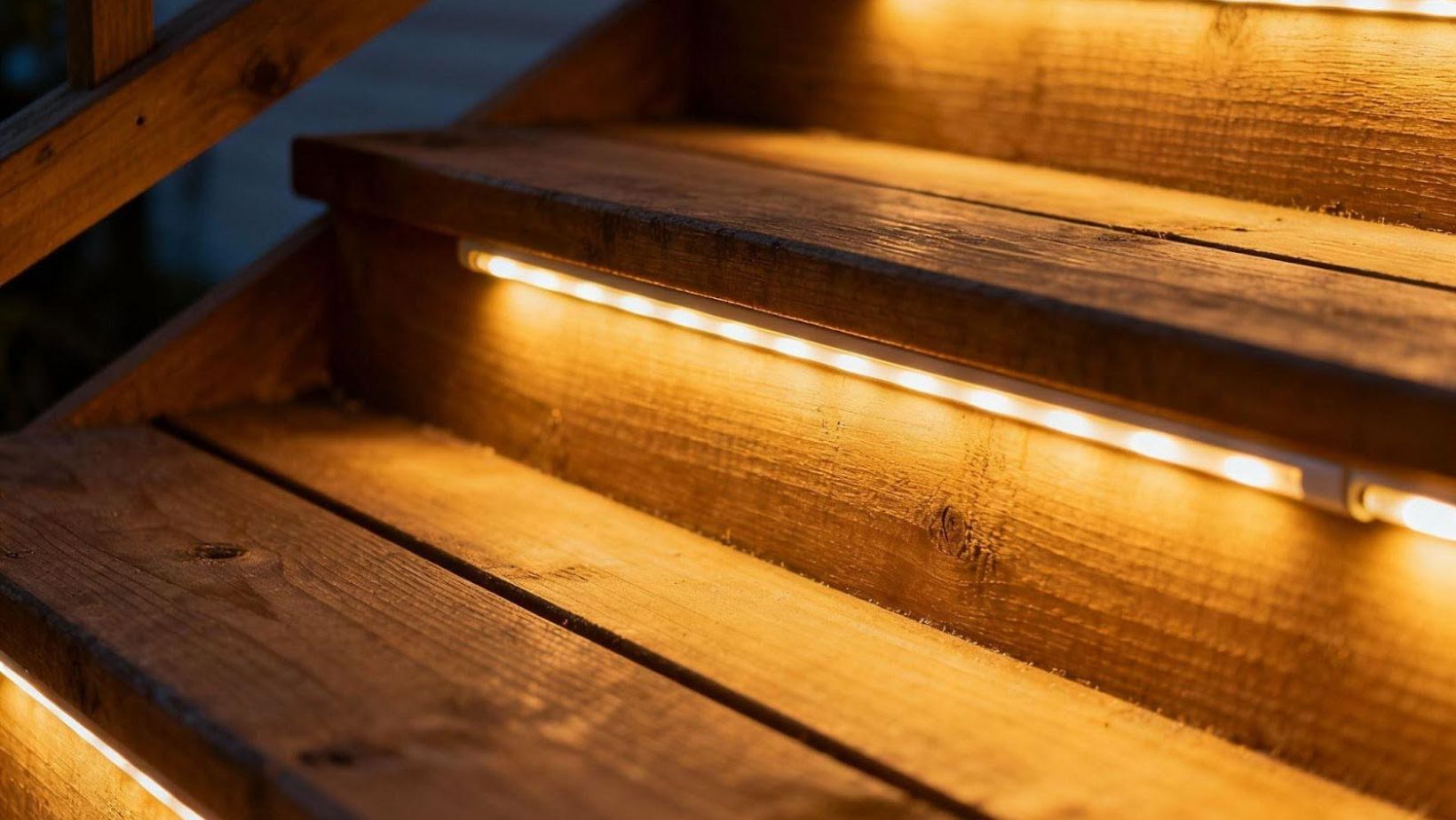
These are flush-mounted fixtures that sit right in your deck surface. They don’t stick up, which is why they’re sometimes called recessed lights. You’ll find them in stair treads, between boards, or at transition points between different deck areas.
The waterproof rating matters here. These lights live in your deck, so they’re exposed to everything. Look for IP65 or better. That number means they’re sealed against moisture and dust, which they need to be.
In-deck lights shine downward to light up pathways and stairs without creating glare. They’re perfect for high-traffic spots where people walk after dark. Safety matters, but these also look really good.
Why Hire a Pro?
I get it. Buying lights and installing them yourself seems straightforward. But outdoor electrical work is different than swapping out a light fixture inside your house.
Building codes exist for outdoor installations. Things like proper grounding, waterproof connections, and safe methods matter. Professionals know these codes because they work with them constantly. Getting it wrong can be dangerous or cause problems down the line.
There’s also the design aspect. A good installer looks at how people move through your space and creates a balanced layout. They’re not just randomly placing lights and hoping it works out. Commercial-grade fixtures, proper wiring, UL-rated systems – these things add up to a system that actually lasts.
Here’s something most people miss: many manufacturers require professional installation to honor warranties. Install it yourself, and that warranty might be void. Plus, fixing DIY mistakes costs way more than doing it right the first time.
Choosing Your System
A few things to think about before you commit:
- Most residential setups use low-voltage (12V) power. It’s safer and easier to work with. Solar options exist, but have limitations if your deck is shaded or you live somewhere with tough winters.
- Light color makes a difference. Warm white (around 2700-3000K) feels cozy and works great for entertaining. Cooler temperatures look modern but can feel a bit cold. Most folks prefer warm for outdoor spaces.
- Think about controls too. Simple switches? Timers? Smart home integration? Dimming options let you adjust the mood. Consider how you’ll actually use your deck when deciding.
The Installation Process
When you work with deck builders near me, here’s what typically happens. They start with a consultation to see your space and discuss what you want. Then they design a lighting plan with specific fixture locations.
Installation involves running wiring, placing the transformer, mounting fixtures, and waterproofing every connection. They test everything to make sure it works and make adjustments. Good builders walk you through the system afterward and show you how to maintain it.
Most jobs take a few days, depending on your deck size. Ask what their post-installation support includes.
Bottom Line
Under-rail and in-deck lighting extends how long you can use your deck each day. It’s not just about looks (though it definitely looks good). It’s about safety and getting more value from your outdoor space.
Professional installation means you get a system that works correctly and lasts. If you’re thinking about adding lighting, get a consultation and custom plan for your specific space. The difference between a dark deck and a well-lit one is pretty dramatic. You’ll actually use it at night, which is kind of the whole point.
About Author