The Shift from Automation to Collaboration
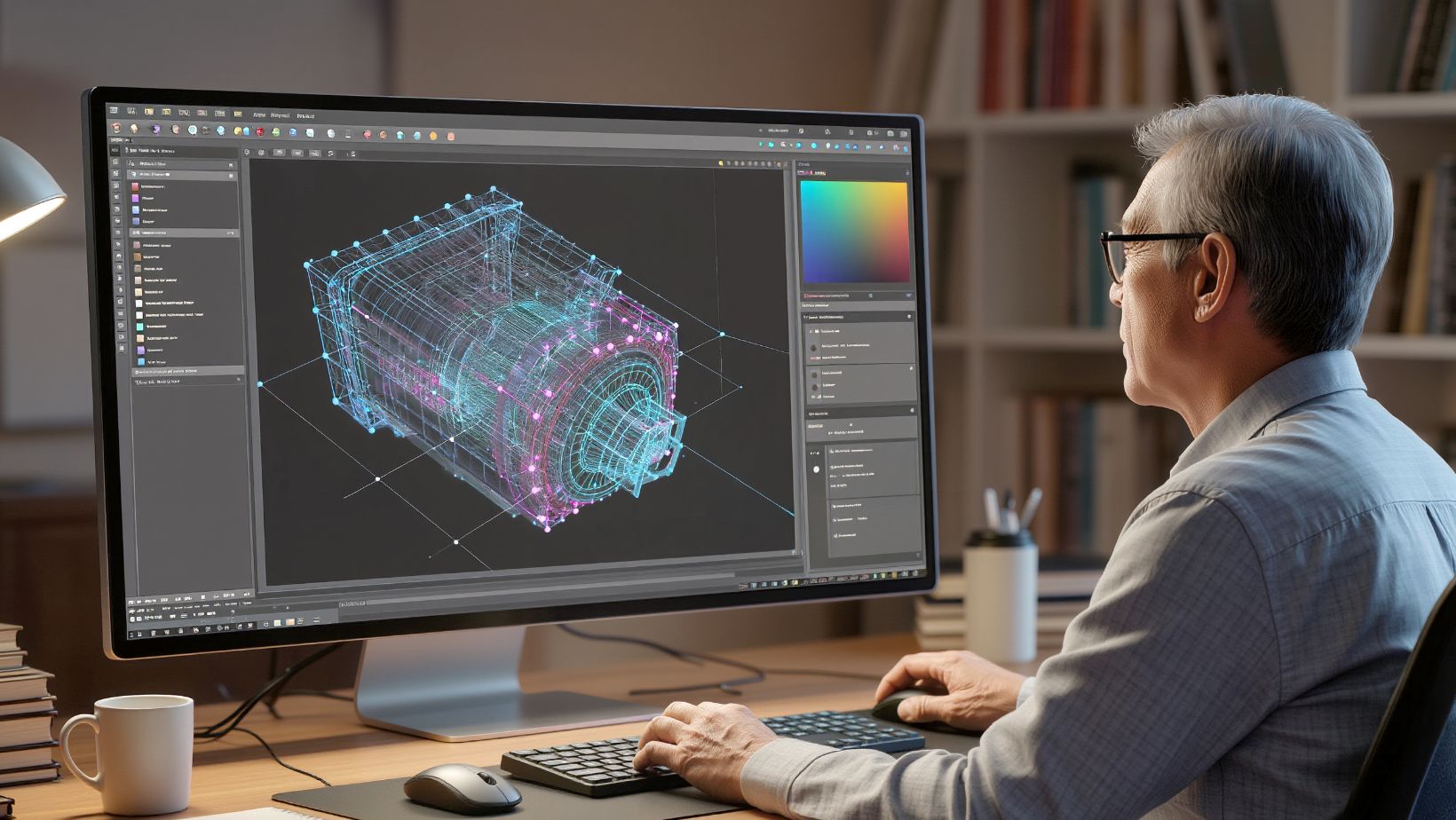
Graphic design has always evolved alongside technology—from the printing press to Photoshop, from desktop publishing to responsive design. Yet, the arrival of Artificial Intelligence (AI) represents not just another tool, but a paradigm shift in creativity itself. Designers are no longer merely using software; they are collaborating with intelligent systems that analyze, interpret, and even inspire.
AI in graphic design today extends far beyond automation. It’s about developing creative intelligence — where algorithms don’t replace human imagination but augment it, opening new territories for expression, experimentation, and innovation.
From Manual Creation to Cognitive Collaboration
When the Machine Learns to Design
AI-driven tools like Adobe Firefly, DALL·E, and Midjourney can now generate complex compositions from simple text prompts. Designers can describe concepts such as “a minimalist brand identity inspired by Bauhaus geometry and coral reefs”, and within seconds, AI generates visual drafts that would otherwise take hours.
But this isn’t just speed — it’s cognition. The AI “understands” context, color psychology, and even style references, building upon massive visual datasets. According to MIT Media Lab (2024), neural networks trained on multimodal data are beginning to exhibit semantic creativity — the ability to connect abstract ideas visually in ways similar to human thought patterns.
Human + Machine: The New Design Partnership
AI doesn’t replace the designer’s mind; it mirrors it. The designer defines meaning, while AI enhances execution. When used intentionally, this partnership feels like co-creation — not command and response.
As designer and creative technologist Jessica Walsh noted:
“AI is like having a junior designer who never sleeps. But you’re still the creative director — the one who sets the vision, emotion, and voice.”
This human–machine relationship defines the next era of graphic design: one where intuition meets computation.
AI as a Mirror of Human Creativity
Pattern Recognition Meets Emotional Resonance
Graphic design communicates emotion through form, color, and composition. While AI excels at recognizing patterns, it’s humans who imbue those patterns with meaning. The fusion of these abilities leads to what researchers call augmented creativity.
For instance, AI can analyze thousands of successful branding campaigns, identify recurring motifs, and generate designs statistically aligned with consumer engagement trends. But it’s the designer who injects authenticity and cultural nuance — the subtle touches that transform data into emotional connection.
Designing Intuition: How AI Learns Aesthetics
AI models like Stable Diffusion learn aesthetics through latent space—a multidimensional environment where the relationships between visual ideas (e.g., “minimalism,” “luxury,” “playfulness”) are mathematically mapped. By navigating this space, designers can guide the algorithm toward specific emotional tones and artistic directions.
This process feels less like “using software” and more like teaching an apprentice how to feel, not just function.
Beyond Tools: Building Creative Intelligence
What Creative Intelligence Means
“Creative intelligence” refers to a designer’s ability to harness AI as a collaborator rather than a shortcut. It involves understanding how algorithms think, how data influences aesthetics, and how to merge human intent with machine suggestion.
According to a 2025 Adobe Design Futures Report, 68% of professional designers already integrate AI in their creative process, but only 27% describe themselves as AI-literate. The next wave of design leadership will come from those who can think in both artistic and algorithmic languages.
Practical Skills for the AI-Enhanced Designer
To thrive in this hybrid environment, designers must evolve in three dimensions:
- Prompt Engineering — mastering the art of crafting descriptive prompts to guide AI effectively.
- Curation and Refinement — selecting, editing, and contextualizing AI-generated outputs with human taste.
- Ethical Judgment — ensuring originality, avoiding plagiarism, and maintaining creative integrity in an AI-driven world.
Design schools across Europe and Australia are now incorporating “AI Collaboration” modules, teaching future designers not how to fight AI — but how to think with it.
The Midpoint: When Designers Start to Talk with AI
As the collaboration deepens, the creative process becomes conversational. Instead of clicking through menus, designers now engage in iterative dialogues with intelligent systems.
At this stage, AI becomes a true creative companion — capable of interpreting mood boards, suggesting improvements, and refining compositions in real time. Designers can simply Ask AI with All-in-One AI Super App – Overchat to reinterpret a visual idea, adjust typographic balance, or generate cohesive branding variations within seconds.
This conversational workflow not only accelerates productivity but also empowers designers to explore more iterations — where innovation often hides. The result: more originality, less friction, and design thinking that evolves dynamically.
Case Studies: AI Empowering Modern Design Studios
1. Brand Identity Reinvented
A Sydney-based studio, Forma Collective, used AI to develop a brand identity for a sustainable fashion label. By feeding the AI system data about materials, environmental goals, and target demographics, the model proposed visual directions that balanced eco-minimalism with urban edge.
The final result—a fluid visual system inspired by organic textures—emerged through multiple human–AI iterations. The design was not AI-made; it was AI-informed.
2. Editorial Layouts That Adapt in Real Time
Digital publications like Design Matters Journal now use AI layout engines that dynamically adjust composition based on screen size, reading patterns, and visual hierarchy. These engines analyze heatmaps and reader behavior, then rearrange elements for optimal engagement — a task once manual, now intelligent.
3. Product Packaging Driven by Predictive Design
In consumer branding, AI analyzes historical design data to predict which color palettes and shapes drive higher shelf visibility and purchase intent. For example, an Australian beverage company increased sales by 23% after using an AI-assisted packaging design that optimized visual impact through predictive modeling.
Ethics, Authenticity, and the Question of Ownership
Who Owns an AI-Generated Design?
The rise of AI-generated visuals raises critical ethical questions. If an algorithm synthesizes an image based on thousands of existing works, where does authorship begin and end? Legal frameworks are still catching up, but creative ethics must evolve faster.
Designers can mitigate this by maintaining transparent workflows, documenting AI interactions, and ensuring the final creative decisions remain human-led. Authenticity, after all, is not about who holds the stylus — but who defines the message.
Avoiding the Homogenization Trap
AI models are trained on vast datasets, which can lead to aesthetic uniformity — the “AI look.” Skilled designers counter this by bending the rules: feeding unconventional prompts, combining analog sketches with AI renderings, or layering multiple models to break predictable outputs.
True artistry lies not in what AI produces, but in how the designer subverts it.
The Future of Design Intelligence
AI as a Catalyst for Creativity, Not Control
By 2030, AI will likely handle 80% of design production tasks — resizing, formatting, prototyping — according to Fjord Trends Report. Yet, this doesn’t diminish the designer’s role; it amplifies it. Freed from repetition, creatives can focus on storytelling, concept development, and innovation.
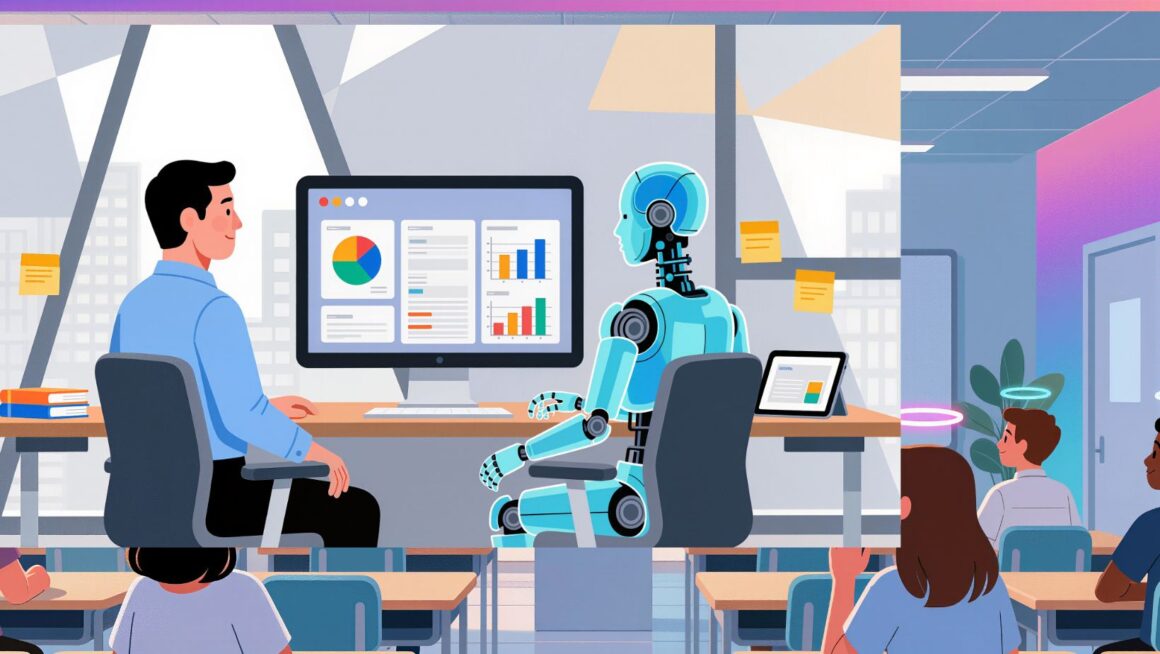
AI’s greatest potential lies in augmenting human imagination, not replacing it. As generative systems evolve to understand emotion, culture, and symbolism, design itself becomes an act of human–machine empathy.
Emerging Fields: Neurodesign and Sentient Aesthetics
The next frontier is neurodesign, where AI systems interpret brainwave data to shape visual experiences tailored to emotional states. Imagine interfaces that adjust color palettes to reduce cognitive fatigue or packaging that evokes calm through AI-optimized visual frequencies.
These innovations signal a shift toward sentient aesthetics — design that responds, learns, and evolves in harmony with human perception.
Conclusion: Designing the Future Together
AI has moved graphic design beyond software proficiency toward creative intelligence. It challenges designers to think deeper, experiment wider, and collaborate smarter. The successful designer of the AI era is not the one who resists technology but the one who shapes its direction.
When humans and machines co-create, art becomes dialogue. And in that dialogue, the future of design is being written — pixel by pixel, idea by idea, intelligence by intelligence.
About Author