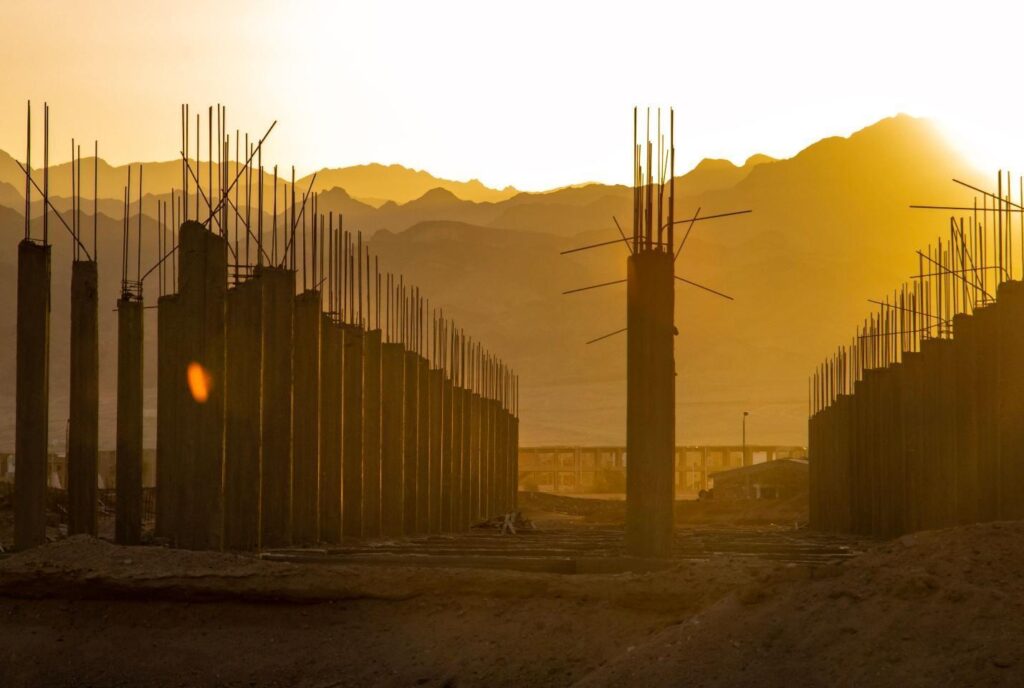
Buildings reflect the priorities of their era. Fifty years ago, structural design was shaped by an expectation of permanence. Owners planned to occupy, operate, or pass down a building for decades. Today, construction takes place in a faster commercial environment, where schedules and short investment cycles can compete with the goal of longevity.
This does not mean modern structures are weaker. Engineering knowledge, digital modeling, safety standards, and material science have advanced significantly. The question is whether every project uses those advances to create a building that will remain useful, repairable, and resilient over the long term.
How Priorities Have Changed
Many structures built 50 years ago were conservative. Designers often used substantial members and proven materials. Buildings were less technologically complex, which could make repairs easier. However, older construction was not always superior. Energy performance was often poor, accessibility received less attention, and some materials later proved hazardous or environmentally damaging.
Modern designers work under different pressures. A project may be judged by its upfront cost, construction speed, energy targets, and visual impact before its service life receives equal attention. Anyone reading a Quonset hut overview may notice how a simple structural form can offer lasting durability through efficient geometry and fewer components. That principle remains relevant: fewer vulnerable connections and easily maintained materials can contribute to a longer life.
Modern Technology Can Support Longevity
Today’s engineers have tools unavailable to previous generations. Building information modeling can reveal clashes before construction begins. Sensors can track movement, moisture, temperature, and structural stress. Advanced coatings help protect steel, while improved concrete mixes can reduce permeability and resist deterioration.
These developments create the potential for longer-lasting structures. Yet technology only delivers value when it supports a clear maintenance and resilience strategy. A highly connected building may prove difficult to operate if proprietary systems are discontinued. Likewise, an innovative facade may look impressive at completion but become expensive to repair when custom components are no longer available.
Long-term design therefore requires more than strength. It requires adaptability, accessible components, realistic maintenance plans, and materials suited to the local climate. A structure designed for changing occupancy can remain valuable even when its original purpose disappears.
Why Some Brands Prioritize Lifespan
Not every company approaches longevity in the same way. Certain construction and building-system brands treat service life as a central part of their reputation. They invest in testing, publish clear performance information, maintain replacement-part availability, and design components that can be repaired rather than discarded.
Other businesses operate in markets where low upfront prices and rapid delivery carry greater commercial weight. Their products may satisfy current codes but offer limited flexibility once warranties expire or operating needs change. Meeting minimum requirements is not the same as maximizing lifespan.
Brands focused on longevity consider the full ownership experience. They recognize that a durable structure depends on installation quality, inspection, maintenance, and support. Their value may not be obvious in the lowest initial bid, but it becomes clearer when costs are measured across several decades.
Sustainability Depends on Durability
Longevity is also an environmental issue. Replacing failed materials consumes resources and generates waste. Demolishing a building because it cannot be adapted can erase some of the benefits achieved through efficient operation. A truly sustainable structure should conserve energy while remaining functional for as long as possible.
Designers can support this goal by choosing robust assemblies, planning for water management, allowing access for repairs, and considering how spaces might change. Owners also need to evaluate life-cycle costs rather than focusing only on construction budgets.
Building Beyond the Present
Today’s structural designs can be built for the long term, but longevity is not the main principle it seems anymore in the modern methods being used. It must be an explicit priority shared by designers, contractors, product manufacturers, and owners.
Compared with construction 50 years ago, modern projects benefit from better analysis and more capable materials. They also face stronger pressure to deliver quickly and economically. The structures most likely to endure are those backed by brands and project teams willing to look beyond completion day. Lasting design comes from balancing innovation with repairability, efficiency with resilience, and immediate cost with decades of dependable use.
About Author