How to Choose the Right Sofa for Your Living Room Layout
Choosing a sofa involves far more than picking something that looks good in a product photo. The right piece has to work with your room’s actual dimensions, support natural traffic flow, and fit the way people genuinely use the space. Homeowners often find themselves weighing compact two-seaters, loveseats, and sectional sofas when planning a room layout around fixed pathways and a central focal point — and each format solves a different problem. Getting this decision right from the start shapes comfortable seating, visual balance, and long-term usability in ways that are surprisingly hard to undo later.
Start With the Room, Not the Furniture
Measuring first prevents expensive mistakes. Before you start browsing, record the room’s length, width, and ceiling height — and don’t forget to note the width of every doorway, hallway, and stairwell the sofa will need to pass through on delivery day. Most interior design guidelines recommend leaving at least 30–36 inches of walkway space along main circulation paths. One practical trick: use painter’s tape on the floor to outline the sofa’s footprint before committing to a purchase. In a narrow apartment, this simple step can reveal that a 90-inch sofa would completely block the path to the dining area — a problem no amount of creative rearranging can fix once the piece is already inside.
Understand the Shape of the Space
Room shape has a significant influence on how a sofa should sit within it. Long, rectangular rooms often call for a sofa anchored against a wall to establish a clear focal point, while open-concept layouts tend to benefit from a piece that floats slightly inward, helping to define distinct zones. Room proportions and negative space both play into visual balance — a sofa that fills every inch of a wall can make a room feel heavy and closed-in, even when the dimensions technically check out.
Match the Sofa Style to How the Room Is Used
A sofa chosen for daily use should honestly reflect the household’s actual habits. Deep, generously cushioned seating suits families who spend evenings stretched out watching television, while shallower, more upright designs tend to work better for conversation-friendly seating during frequent entertaining. Seat depth and cushion support are practical factors that often get pushed aside in favor of aesthetics — yet they’re precisely what determines whether a sofa remains comfortable after years of regular use.
Consider Size, Scale, and Proportion
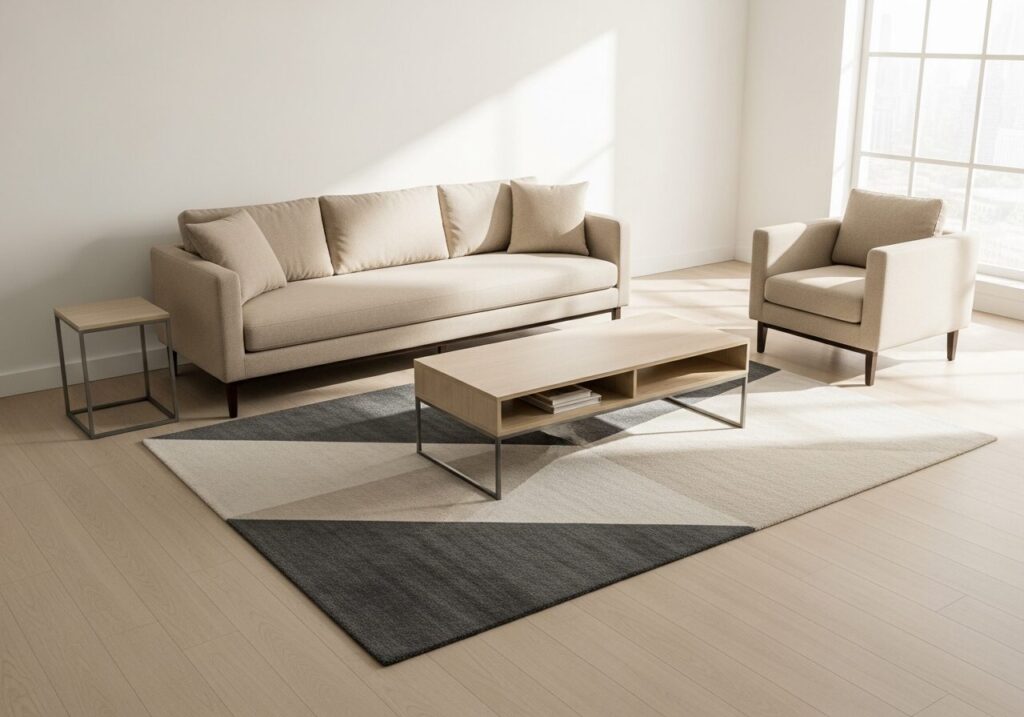
A sofa’s visual weight matters just as much as its measurements. A large, dark piece can easily dominate a compact room even when it technically fits within the available space. Scale and proportion relative to surrounding furniture — the coffee table, side tables, and rug — determine whether the room feels cohesive or simply crowded. The goal is always balance, not just filling whatever space happens to be available.
When a Sectional Makes Sense
Sectional seating comes into its own when the priority is maximizing capacity, carving out zones within an open floor plan, or anchoring a corner of the room. An L-shaped layout can frame a media wall beautifully, but only when there’s adequate clearance on all sides. Chaise placement and the room’s primary viewing direction should guide the configuration — the wrong orientation can obstruct natural pathways or create an awkward sightline that’s difficult to work around.
Choose Materials and Maintenance Based on Real Life
Upholstery should be chosen to match the household’s actual conditions, not just its aspirations. Homes with pets or young children are better served by performance fabric or tightly woven textiles with stain resistance. Removable covers simplify cleaning considerably and extend the life of the piece. Leather, woven fabrics, and textured materials each carry different durability profiles — choosing based on maintenance realities, rather than visual appeal alone, leads to a sofa that genuinely holds up over time.
Plan the Rest of the Room Around the Sofa
A sofa anchors the room, but the surrounding pieces are what complete it. Rugs, lighting, and a properly scaled coffee table all reinforce a cohesive layout. Layered lighting, in particular, can help define a reading zone or conversation area within the same space without requiring any additional furniture.
Key Takeaway: Choose a sofa’s size in relation to the full room — not just the wall it sits against. Supporting furniture like rugs and side tables help translate a single large piece into a balanced, functional layout.
Common Buying Mistakes to Avoid
Even careful shoppers make avoidable errors:
- Forgetting to measure the delivery path before purchasing
- Ignoring traffic flow and walkway clearance during planning
- Choosing style before function
- Overlooking scale relative to the room’s actual dimensions
- Failing to consider how the sofa will realistically be used day to day
The most successful sofa choice is ultimately the one that’s genuinely fit for the room — not a showroom image transplanted into a space it was never designed for. Measuring carefully, thinking honestly about daily life habits, and prioritizing practical fit over visual aspiration leads to lasting comfort that serves the room for years to come.
About Author