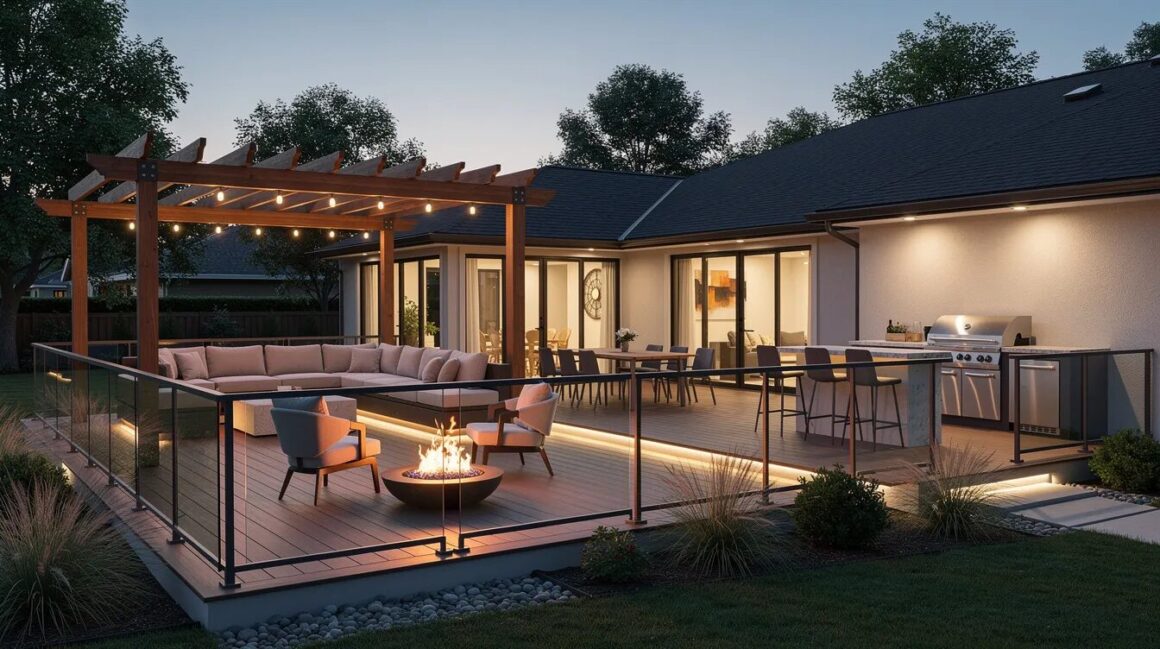
Some backyard deck design ideas are fun to imagine. A fire pit in the corner. A pergola with shade sounds good. So does a stone fireplace, a covered area, or an outdoor kitchen with a grill, storage, and space for family dinners. These features can create a perfect spot for entertaining, relaxing, and spending more time outdoors year round, especially when cooking, dining, and lounging areas are planned so people can move across the deck naturally.
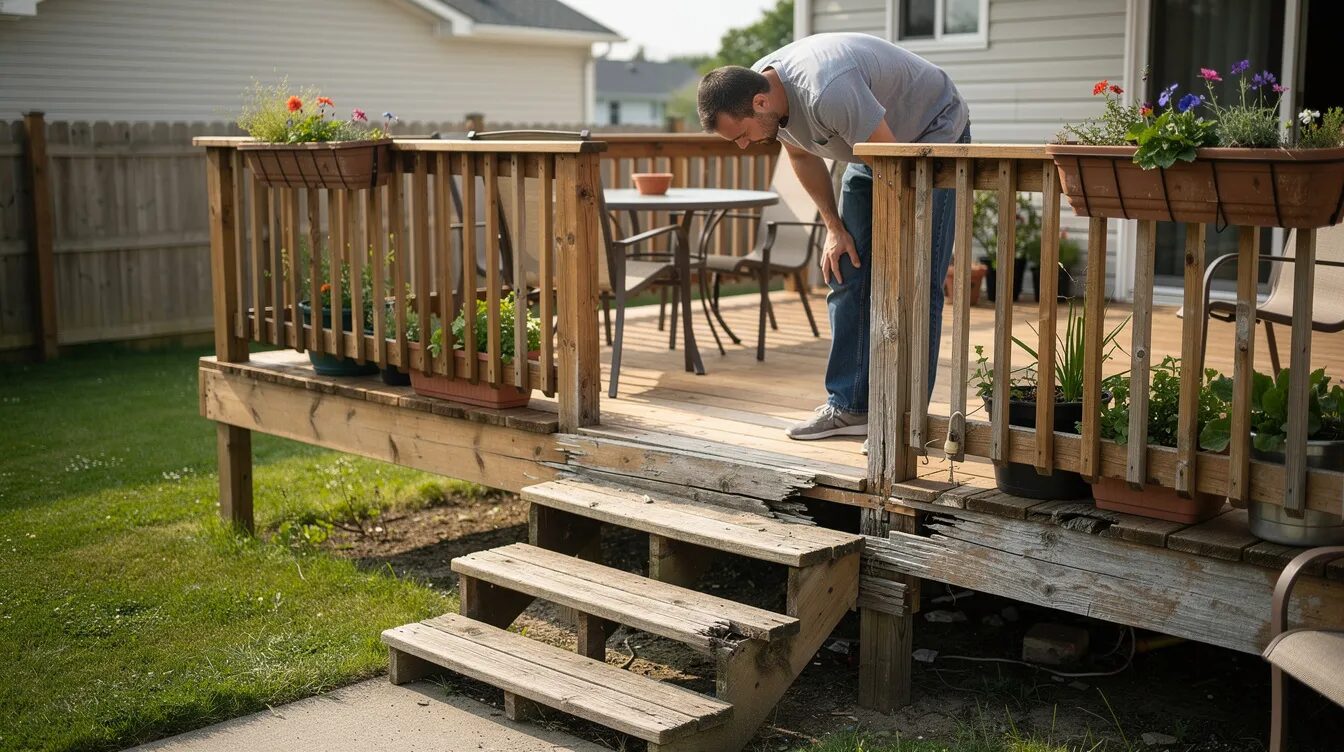
That is the step homeowners often skip. The patio deck still looks okay from the yard, with enough room for chairs, planters, and summer evenings, so the warning signs get pushed aside: loose railings, soft boards, or a weak spot near the stairs. Then someone leans on the rail and it shifts. Or a board bends just enough to make guests look down before taking the next step. That is when the project changes. It is no longer only about style. It is about safety.
Small Patio Deck Problems Are Not Always a Big Deal
Not every issue means the whole deck is failing. Faded stain, dirty decking boards, one cracked board, or a few loose screws can often be fixed. Sun, rain, furniture, planters, and regular use all leave marks.
The bigger concern is repetition. The same area keeps getting soft. The stairs dip again. The deck space moves when people walk across it. The wood near the main house feels spongy after rain.
A deck carries more than people. It holds seating options, a grill, planters, guests, sometimes even a hot tub. Multilevel decks can maximize space and functionality, and many homeowners use them to separate dining and lounging without making the deck feel crowded. Still, if the structure feels unstable, adding more features will not solve the problem.
Check Where the Deck Meets the House
The connection near the house is one of the first places to inspect because this is where indoor and outdoor spaces meet. Look around sliding glass doors, siding, flashing, and spots where water can collect. Moisture often causes trouble before the surface looks terrible.
Dark stains, gaps, soft wood, or repeated water damage near the wall should not be covered with paint and forgotten. That is usually when it makes more sense to call a deck contractor who can assess the full structure instead of paying for another small repair.
Sometimes the fix is simple. Sometimes the deck needs new decking boards, better drainage, stronger framing, or a more involved deck project. Material selections should also be checked against local codes before construction decisions are made. Guessing is where money gets wasted.
Outdoor Space Conditions Change How a Deck Ages
A deck in full sun ages differently from one under trees. A shaded patio may stay damp longer, especially when natural elements like dense shrubs, fallen leaves, and nearby planting beds hold moisture against the structure. Poor drainage in the surrounding landscape, concrete edges, or compacted soil can stress posts, framing, and lower wood. In New Jersey’s changing climate, native plants, raised garden beds with perennials, and low-maintenance evergreen shrubs can help the landscape stay attractive without crowding the structure. Even landscaping around the deck can change how quickly moisture dries.
That is why local deck contractors who understand regional weather conditions can be useful. They look at the site, not just the boards.
Material choice matters too. A composite deck can be the better choice when durability and lower maintenance are the main goals, especially when the surface needs to complement the home instead of demanding constant upkeep. Composite decking now comes in rich colors, not just flat-looking basic tones, and versatile board sizes can help reduce waste during planning. Wider boards can make the deck look cleaner and more seamless, while Trex composite decking boards can be curved for some deck design ideas. Still, a composite deck cannot fix weak framing. No material can.
Do Not Let Neutral Tones, a Fire Pit, or an Outdoor Kitchen Cover Real Damage
Modern deck trends can make any backyard feel tempting. Neutral tones. Natural materials. Built-in seating. Covered porches. A gazebo. Cozy corners for reading or coffee. Garden beds, trees, and other natural elements can bring the deck closer to nature and highlight the natural beauty of the yard. These details offer plenty of inspiration and can transform a plain platform into something that feels more connected to the home.
An outdoor kitchen can take the idea further. It can pull cooking, dining, and conversation into one outdoor zone, especially when the outdoor dining area feels like a seamless extension of the kitchen. If the dining area sits close to the kitchen door, it becomes a perfect place for meals, guests, and regular evenings outside. A pool view, fireplace, or pergola can extend the whole setup and make it feel complete.
Before adding design features, it helps to check the deck’s basic condition:
|
What to check |
Why it matters |
|
Wobbly railings |
Railings and banisters should feel secure, especially on raised decks and stairs. |
|
Soft or spongy boards |
Wood that feels soft under pressure may point to decay or moisture damage. |
|
Loose fasteners |
Nails, screws, brackets, and connectors help hold the deck together. Loose or missing hardware should not be ignored. |
|
Uneven stairs or handrails |
Stairs should feel stable, and handrails should be easy to grip where required. |
|
Debris and trapped moisture |
Leaves, dirt, and standing moisture can speed up deterioration, especially around corners, posts, and under furniture. |
But a weak deck should not be dressed up. It should be fixed. If the railings wobble, the surface feels uneven, or the deck moves underfoot, the design ideas can wait.
What Is Worth Repairing Before Outdoor Living Upgrades?
A small repair can make sense when the issue is truly limited. For example, one damaged board can be replaced. Loose hardware can be tightened. Mildew can be cleaned. Planters can be moved so water is not trapped in the same spot. Solid wood can be restained before it dries out too far.
The problem changes when those same issues keep returning. At that point, the deck may need more than routine maintenance. Better drainage, stronger framing, different materials, or a layout that connects the indoor and outdoor areas more naturally may be the real fix.
The best outdoor living space ideas work better when the deck already feels secure. Then seating, dining, lighting, shade, storage, a fire pit, a pergola, or a small outdoor kitchen can add real value and give people a better place to spend time outside. A deck does not have to be flawless. It has to be safe, useful, and a perfect fit for the way the backyard is lived in.
About Author